
Da Vinci’s work and life offers many great insights for entrepreneurs. Some of his principles and mindset have now shown, through modern research, to be defining assets for founders. I won’t go into Da Vinci’s life in a traditional sense, but just zero-in on a few of his principles most relevant for founders: insatiable learning, opportunity-spotting and productive procrastination.
Leonardo da Vinci died with the Mona Lisa still in his studio, unfinished after sixteen years. We celebrate him as a polymath, yet he was also history's greatest procrastinator. He left behind 13,000 pages of notes but published nothing. Started thousands of projects but completed few. Promised flying machines to patrons but delivered theatrical props. His greatest weakness was inseparable from his greatest strength.
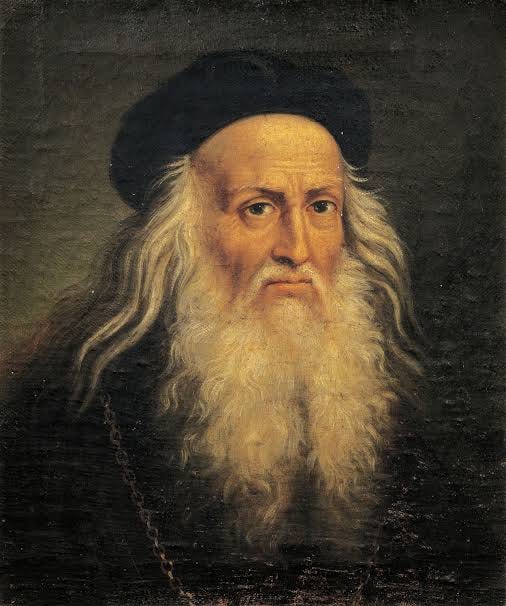
Underlying all of Leonardo's traits was a fiercely independent and outsider mind. Born out of wedlock, he was barred from elite Latin schooling, a twist of fate he later regarded as a blessing. Being self-taught made him a "disciple of experience," free from the scholastic dogma that dominated Renaissance thought.
He was also unconventional in his personal life – flamboyant in dress, openly gay by most interpretations, and not one to conform to societal expectations. All of this paints a picture of a man utterly unafraid to think and act different.
This outsider mentality echoes many successful modern founders. Steve Jobs, college dropout and cultural outsider, often cited da Vinci as inspiration, noting: "He saw beauty in both art and engineering, and his ability to combine them was what made him a genius."
The 'Da Vinci Barbell’: Art × Science
Leonardo embraced what we might call a "creative barbell strategy" – investing heavily towards his most ambitious artistic and scientific pursuits, gaining unique perspectives to generate new questions, new ideas.
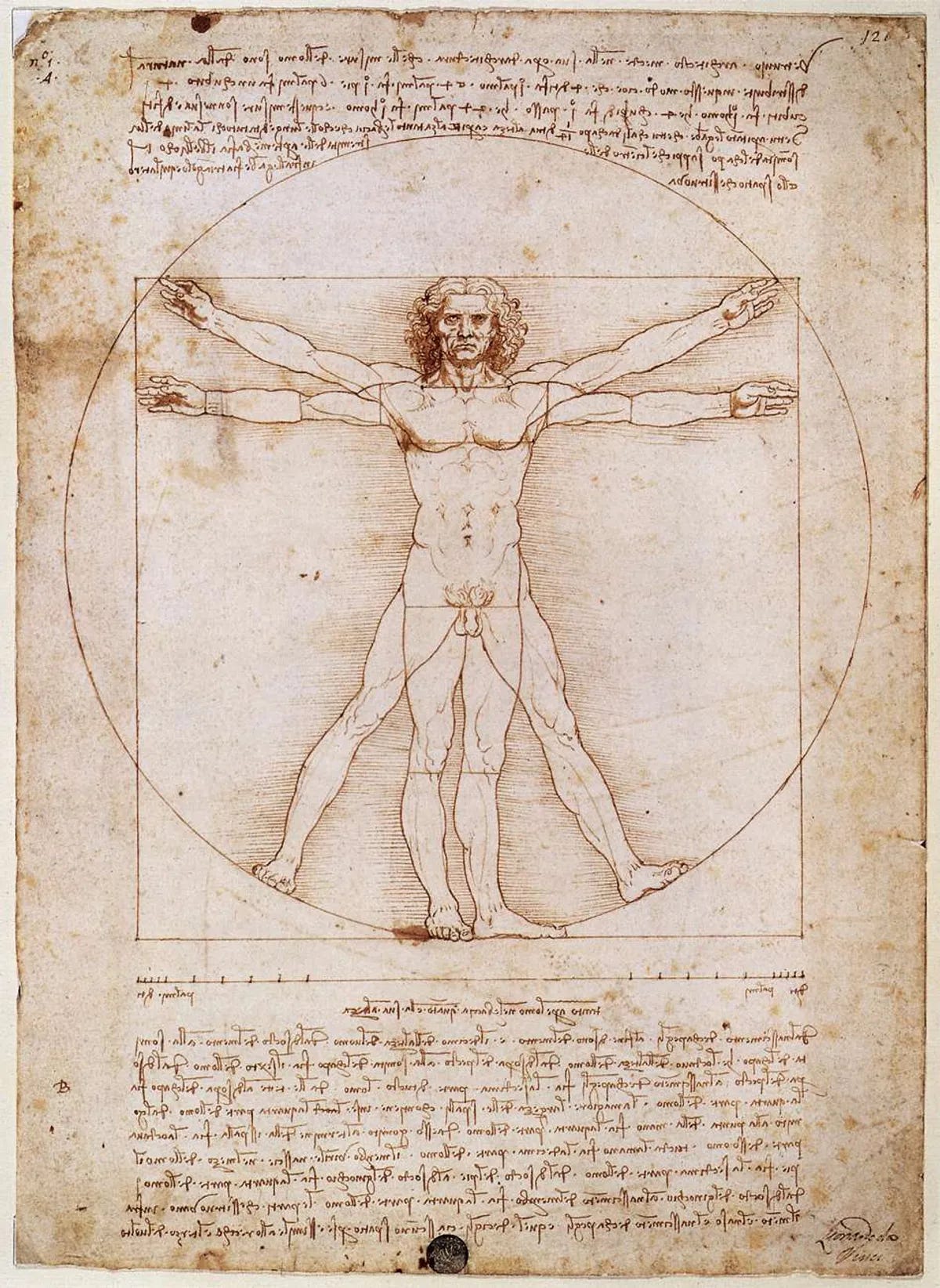
This cross-pollination produced masterpieces like the Vitruvian Man – a drawing that unified art, mathematics, and anatomy in a single image. The drawing wasn't just aesthetically pleasing; it represented da Vinci's understanding of proportions that would inform his engineering and architectural work.
Modern research confirms the entrepreneurial value of this creative barbell. A 2021 study published in the Journal of Business Venturing found that entrepreneurs with T-shaped skills1 – deep expertise in one area combined with breadth across multiple domains – were 40% more likely to identify novel market opportunities than single-domain specialists.
Unhinged Curiosity
“The noblest pleasure is the joy of understanding.”
Leonardo's driving force was an insatiable curiosity – a need to understand everything about the world around him. His notebooks reveal a mind constantly questioning: why people yawn, how blood flows, what makes the sky blue.
He didn't fight his curiosity — he weaponized it. When designing a flying machine, he would notice how birds tucked their feet during flight, which led him to study bird anatomy, which made him curious about human anatomy, which prompted him to perform dissections, which revealed how muscles worked, which inspired new machines – a virtuous cycle of inquiry towards better and more interesting questions.
For Leonardo, no curiosity was too eccentric – anything might yield insight.
This trait has powerful entrepreneurial implications. A 2024 longitudinal study of 249 technology entrepreneurs found that curiosity strongly correlates with both process and product innovation (r = 0.39 with entrepreneurial intention and r = 0.50 with entrepreneurial orientation).2
Notably, researchers distinguish between two types of curiosity: interest-type (I-type) for pleasure of discovery, and deprivation-type (D-type) seeking to eliminate knowledge gaps. Leonardo exemplified both – pursuing beauty and wonder while systematically closing gaps in understanding through structured observation.
Productive Procrastination
"Men of lofty genius sometimes accomplish the most when they work least…for their minds are occupied with their ideas and the perfection of their conceptions, to which they afterwards give form."
Leonardo carried the Mona Lisa with him for sixteen years, making imperceptible improvements, letting ideas incubate between sessions. To him, shipping meant death—the closing of potential.
His notorious habit of leaving projects unfinished finds surprising support in modern creativity research. A landmark 2020 study in the Academy of Management Journal discovered an inverted U-shaped relationship between procrastination and creativity: moderate procrastination fostered more creative ideas than either immediate execution or chronic delay.3
The mechanism involves what researchers call "incubation periods." During apparent breaks from focused work, the brain continues processing problems unconsciously, often leading to breakthrough insights.
The research distinguishes productive from counterproductive procrastination:
Productive delays: Working on related but different tasks while maintaining domain engagement (exactly what Leonardo did when alternating between art, engineering, and scientific observation)
Counterproductive procrastination: Complete avoidance driven by fear or perfectionism
The ultimate irony is that by refusing to ship, Leonardo shipped immortality. Leonardo’s legacy may not be in what he finished, but in what he began. His "failed" flying machines laid groundwork for aviation. His "unfinished" anatomical studies advanced medicine by centuries. His "abandoned" engineering projects presaged modern hydraulics, optics, and robotics.
Perhaps his biggest contribution was in finding and asking the questions worth exploring for future generations.
The best things have no exit plans. They just keep becoming. Your startup will end. Your product will be replaced. Your technology will be obsolete. But the questions you ask, the connections you make, the possibilities you open—these can echo through centuries.
Have a nice week end 🌕✌🏼
Hsu, D. K., Simmons, S. A., & Wieland, A. M. (2021). "Designing entrepreneurial knowledge: T-shaped expertise and opportunity innovation." Journal of Business Venturing, 36(3), 106-127.
Karimi, S., & Maempa, T. (2024). "Entrepreneurial curiosity and innovation: A longitudinal study of technology ventures." Journal of Business Research, 167, 114011.
Shin, J., & Grant, A. M. (2020). "When putting work off pays off: The curvilinear relationship between procrastination and creativity." Academy of Management Journal, 63(5), 1285-1306.